 English
  中文简体
中文简体  русский
  عربى
عربى What Are Fire Hoses Made Of? PVC vs EPDM Lined Fire Hose Guide
 2026.10.12
 Industry News
What Fire Hoses Are Made Of: The Short Answer
A fire fighting hose is a layered composite: a flexible inner lining that carries the water, a woven textile jacket that provides strength, and (on some types) an outer cover for abrasion, heat or chemical resistance. The jacket is usually woven from polyester or nylon filament yarn. The lining is most often PVC (polyvinyl chloride), TPU (thermoplastic polyurethane) or EPDM rubber, depending on the service the hose is built for.
Brass, aluminum or stainless steel couplings are then attached at each end, which turns a length of hose into a working fire fighting hose assembly. Each element has a specific job, and the hose is only as dependable as its weakest layer or coupling connection.
The Layers Inside a Fire Fighting Hose
Modern fire fighting hose follows a simple principle: the lining keeps water in, and the reinforcement keeps pressure from bursting the lining. Separating these two jobs allows the hose to be light, flat-packable and strong at the same time.
Inner lining
The lining is the waterproof tube. It must resist water hammer, stay flexible when folded or coiled, and bond tightly to the jacket. Common lining materials include PVC, TPU, natural rubber and EPDM. The choice of lining determines the hose's flexibility, temperature range, weight and resistance to chemicals and weathering.
Reinforcement jacket
The jacket is a tightly woven tube of polyester (most common) or nylon yarn. Polyester is preferred for most hoses because it absorbs very little water, resists rot and mildew, and holds its strength when wet. Older hoses used cotton or linen, which required drying after use and degraded far faster. Double-jacket constructions use a second woven layer to raise burst strength and abrasion resistance.
Outer cover or coating
Some hoses are given a rubber, PVC or polyurethane outer cover. This protects the textile from sharp edges, hot embers, oil and ultraviolet exposure. It is common on industrial, marine and wildland hoses, and on any hose dragged across rough ground.
Couplings
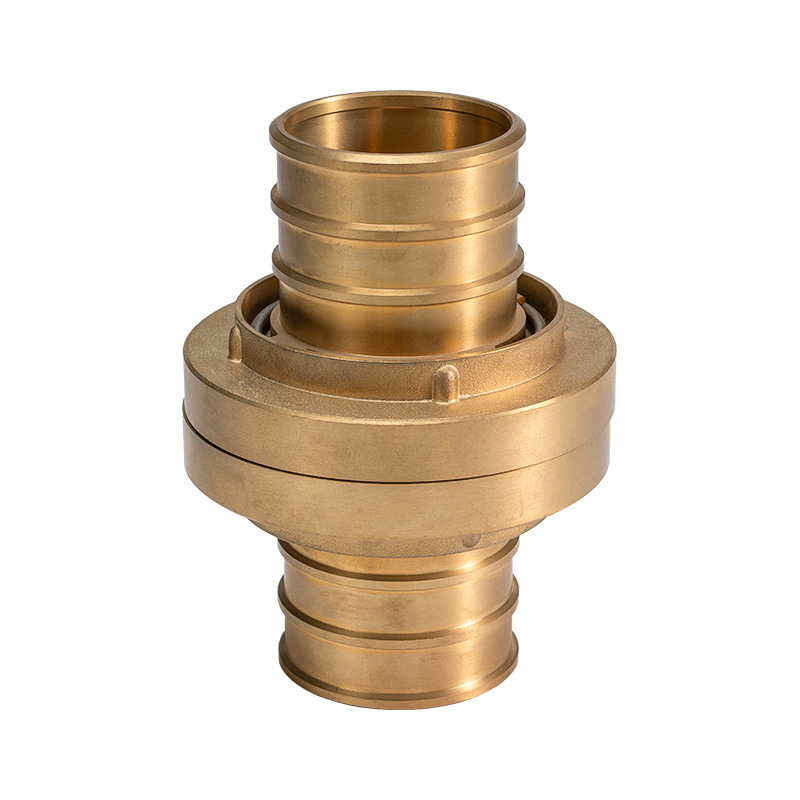
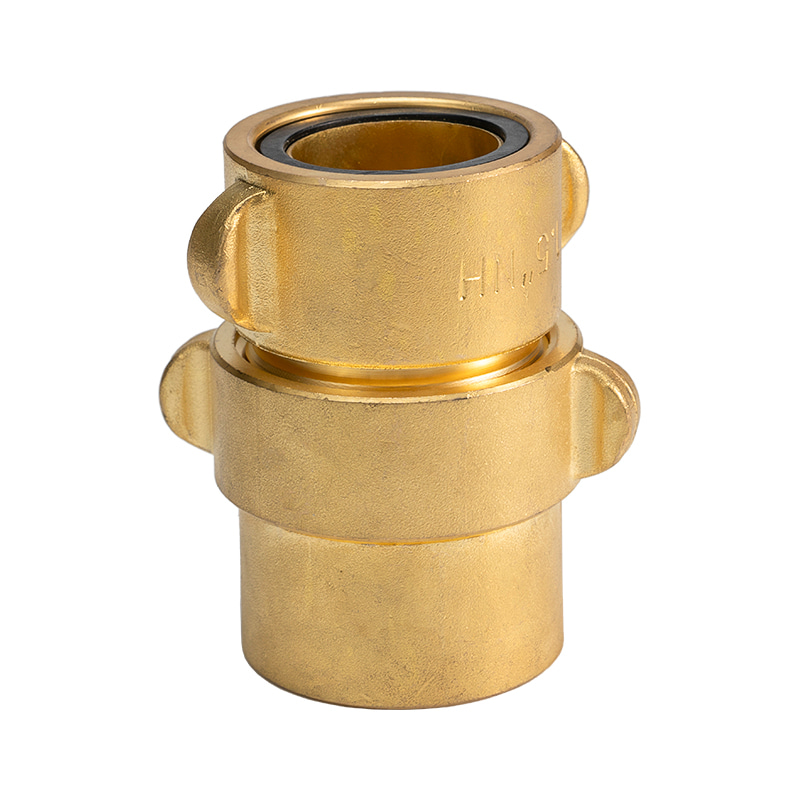
Couplings are typically made of brass, aluminum alloy or stainless steel. Aluminum is lighter and widely used by fire departments, brass resists corrosion and is common in industrial and marine settings, and stainless steel is chosen for aggressive environments. Thread or connection type (storz, NH/NST, BSP, instantaneous) must match the rest of the system.
PVC Lined Fire Hose vs EPDM Lined Fire Hose
The most frequent buying decision is between a PVC lined fire hose and an EPDM lined fire hose. PVC suits cost-sensitive, general-purpose and standby use; EPDM suits demanding, high-temperature, outdoor or frequently handled service.
PVC lined fire hose
PVC lining is extruded or coated inside a woven polyester jacket. It is lightweight, economical and widely available, which makes it the standard choice for building hydrant cabinets, fire hose reels, and light industrial installations. Its limits are reduced flexibility in cold weather and a lower tolerance for heat and prolonged sunlight compared with rubber.
EPDM lined fire hose
EPDM (ethylene propylene diene monomer) is a synthetic rubber with excellent resistance to ozone, UV, weathering and hot water. It stays flexible across a wide temperature span, commonly from around -40°C to over 100°C depending on the hose build. This makes EPDM lined hose a strong option for outdoor use, fire trucks, refineries, ports and sites that see repeated deployment.
| Feature | PVC Lined | EPDM Lined |
|---|---|---|
| Weight | Lighter | Slightly heavier |
| Cold flexibility | Stiffens in low temperatures | Stays flexible in extreme cold |
| Heat and UV resistance | Moderate | Excellent |
| Service life under heavy use | Shorter | Longer |
| Cost | Lower | Higher |
| Typical use | Hydrant cabinets, reels, light industrial | Fire trucks, refineries, ports, outdoor sites |
How High Pressure Fire Hose Is Built Differently
A high pressure fire hose is designed for working pressures well above those of standard attack lines. Where a standard lay-flat hose may be rated around 8 to 16 bar, high pressure types for industrial, offshore and municipal pumper service are commonly rated for working pressures of 16 to 40 bar or more, with burst pressure typically at least three times working pressure.
To achieve this, manufacturers change several elements:
- A heavier or double woven polyester jacket for higher hoop strength
- A thicker, well-bonded rubber lining (often EPDM or TPU) that resists delamination under pulsing pressure
- Reinforced or crimped couplings engineered to hold at the rated pressure
- An abrasion-resistant outer cover for rough terrain
Always check that the hose, coupling and pump or nozzle are rated for the same pressure class. A high-rated hose connected to an under-rated coupling still fails at the coupling.
What a Fire Fighting Hose Assembly Includes
A fire fighting hose assembly is a hose cut to length and fitted with couplings, ready to connect to a hydrant, pump or nozzle. Buying a tested assembly is safer than fitting couplings in the field, because the binding method, wire or band tension and coupling seat all affect pressure performance.
Common assembly components
- Hose length, commonly 15 m, 20 m or 30 m (about 50 or 100 ft)
- Male and female couplings, or a symmetrical type such as storz
- Gaskets that seal each connection
- Binding wire, clamps or bands securing the hose to the coupling shank
Why assembly quality matters
Most field failures occur at the coupling, not in the hose body. A properly assembled unit is hydrostatically tested, typically at 1.5 times working pressure or as required by the applicable standard, before it leaves the factory.
How to Choose the Right Fire Hose for Your Application
Match the hose to the environment, pressure and frequency of use before comparing price. The table below gives a practical starting point.
| Application | Recommended Hose | Reason |
|---|---|---|
| Building hydrant cabinet | PVC lined, polyester jacket | Low cost, light, stored indoors |
| Fire truck attack line | EPDM lined, double jacket | Durable, flexible, frequent deployment |
| Refinery or petrochemical site | High pressure EPDM or TPU lined with cover | Heat, oil and abrasion resistance |
| Marine and offshore | EPDM lined with brass or stainless couplings | Salt, UV and corrosion resistance |
| Cold climate outdoor use | EPDM lined | Stays flexible at low temperatures |
Checklist before ordering
- Confirm the required working pressure and burst pressure ratings.
- Select the diameter (commonly 1.5 in, 2.5 in or 4 in, or 38 mm, 65 mm and 100 mm) to meet flow requirements.
- Choose the lining based on temperature, weather and chemical exposure.
- Verify coupling type, material and thread standard.
- Ask for the compliance standard, such as EN 14540, NFPA 1961 or the relevant national equivalent, and a test certificate.
Inspection and Maintenance to Extend Hose Life
Well-maintained fire hose can remain serviceable for many years, but a hose that is never inspected can fail precisely when it is needed. NFPA 1962 calls for annual service testing of in-service fire hose, and many facilities apply a similar schedule to standby hoses.
- Rinse off dirt, salt and chemicals after each use, then dry the hose fully before storage.
- Inspect the jacket for cuts, burns, bulges and worn spots.
- Check gaskets for cracking and couplings for dents, thread damage and loose bindings.
- Re-fold or re-roll stored hose periodically so creases do not sit in the same place.
- Remove any hose that fails a pressure test from service immediately.
Keeping a logbook with each hose's serial number, purchase date, test dates and results makes it easy to spot aging stock and plan replacements before problems occur.
News&Event
-
Is a Fire Fighting Hose with a reflective stripe worth the cost over a plain Fire Fighting Hose for night operations?
Short Answer: Yes, for Most Night Operations A Fire Fighting Hose with a reflective stripe is worth the extra cost in almost every night-time scenar...
READ MORE -
Indoor Fire Hydrant Systems: How to Choose, Place, and Maintain Them So They Work When It Counts
Short answer An indoor fire hydrant is a hose outlet connected to a dedicated standpipe inside a building. It gives trained users and firefighters pr...
READ MORE -
The necessity and importance of fire-fighting facilities
The necessity and importance of fire-fighting facilities are mainly reflected in the following aspects: Prevention of fire: Firefighting facilities su...
READ MORE -
Correct use of fire-fighting facilities
The correct use of fire-fighting equipment includes the use of fire extinguishers, fire hydrants, smoke escape masks, escape ropes, and fire blankets....
READ MORE