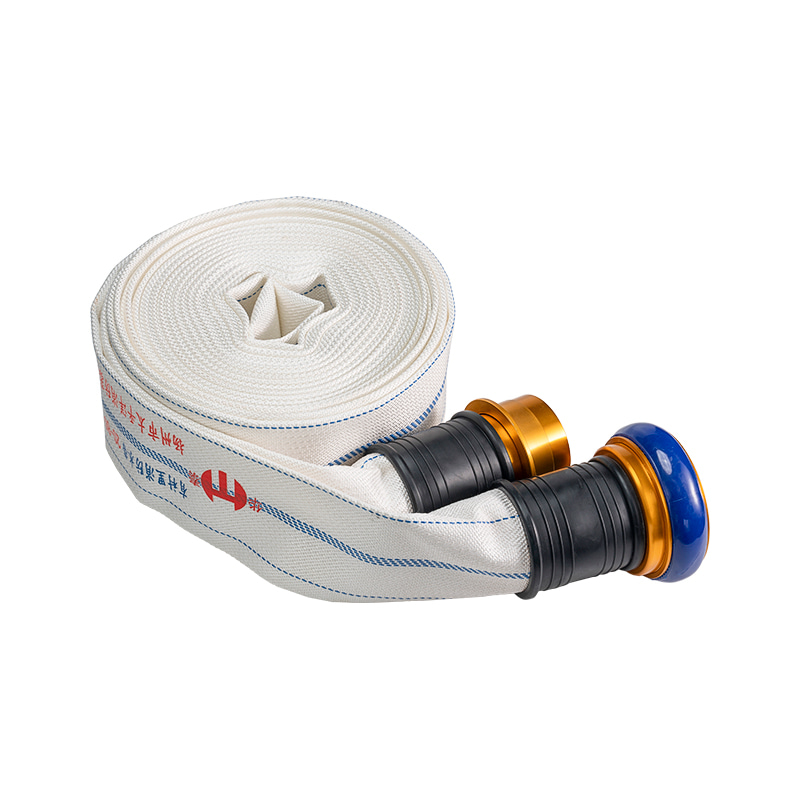
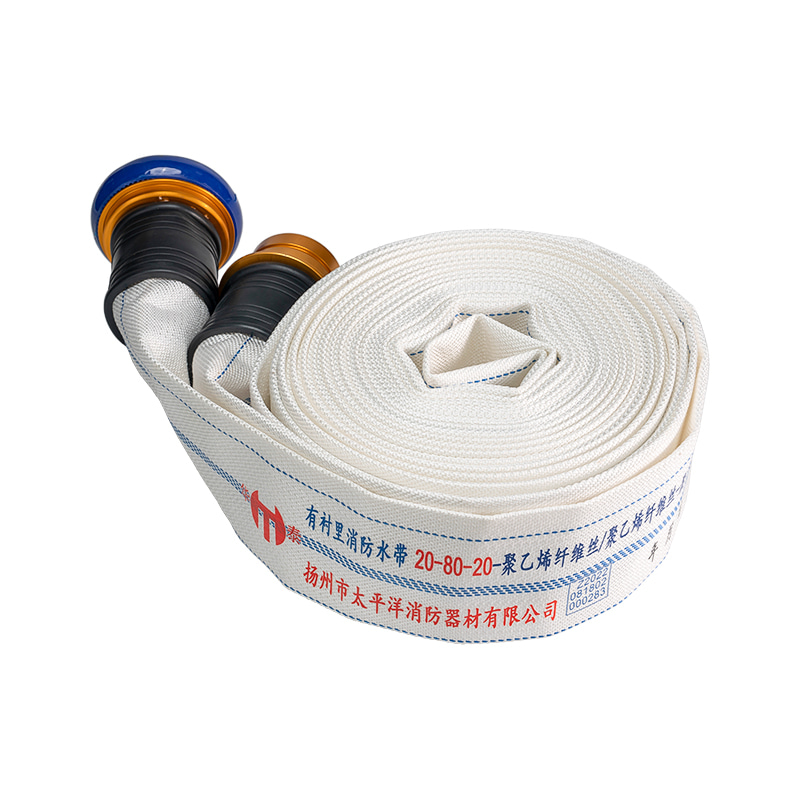
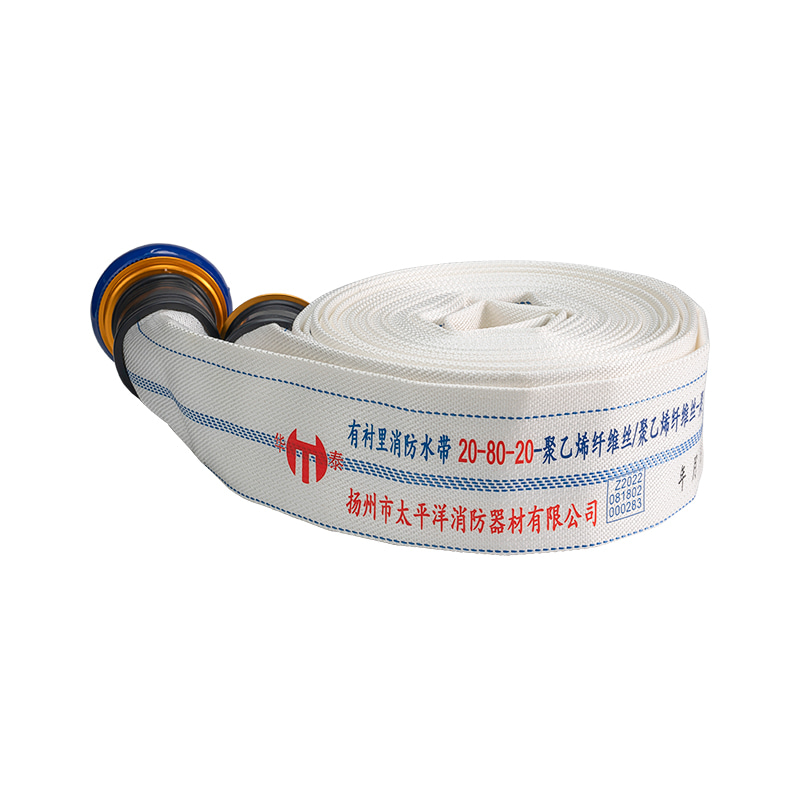
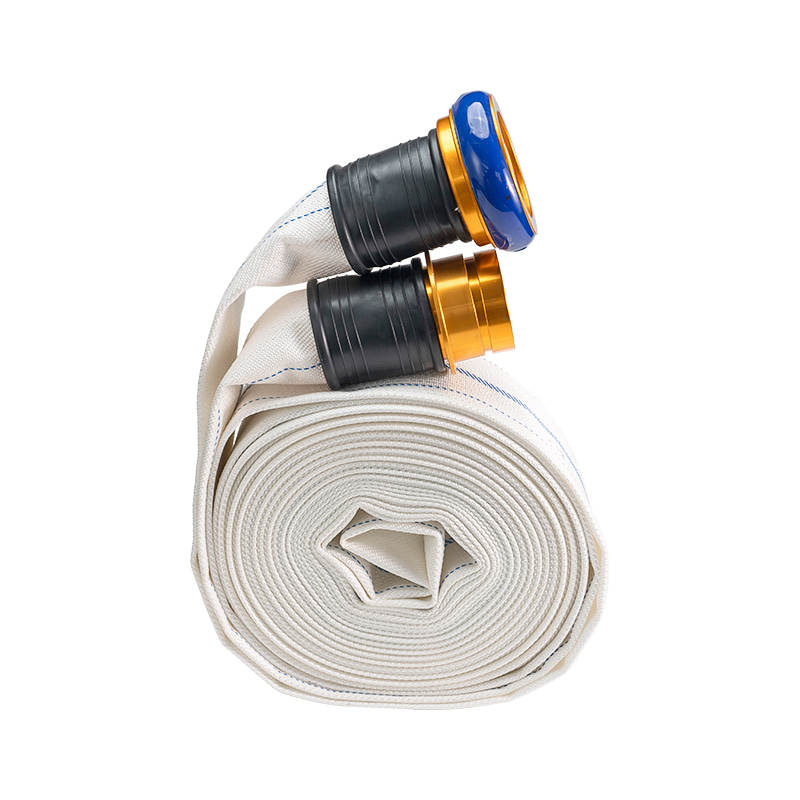
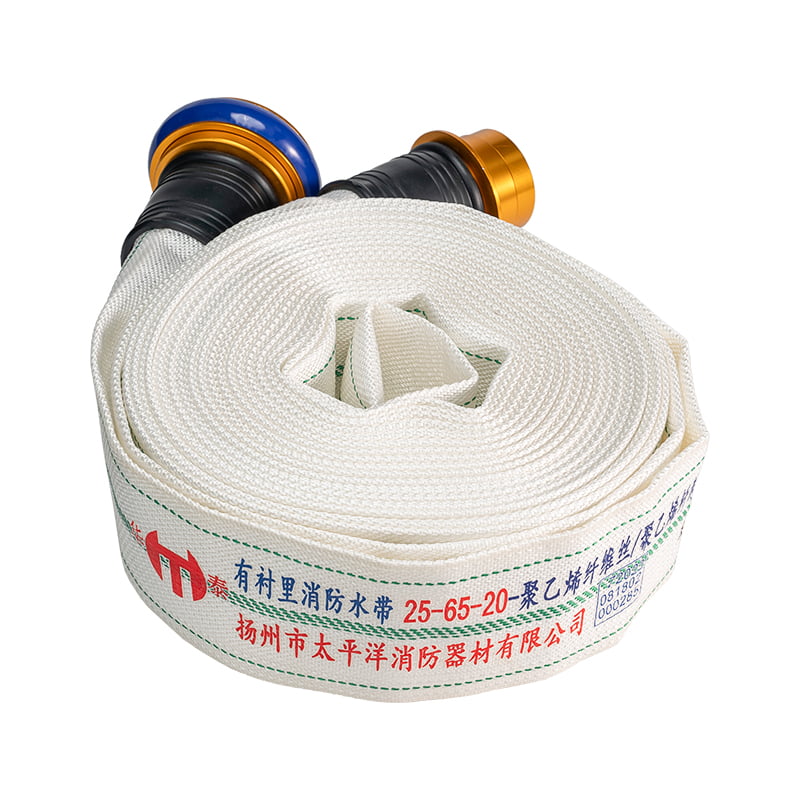
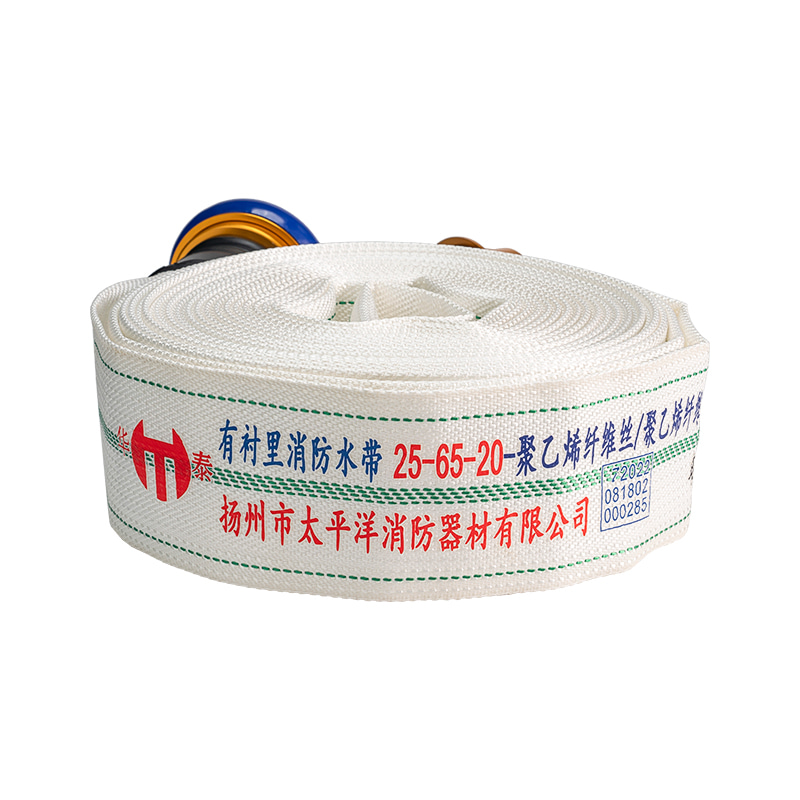
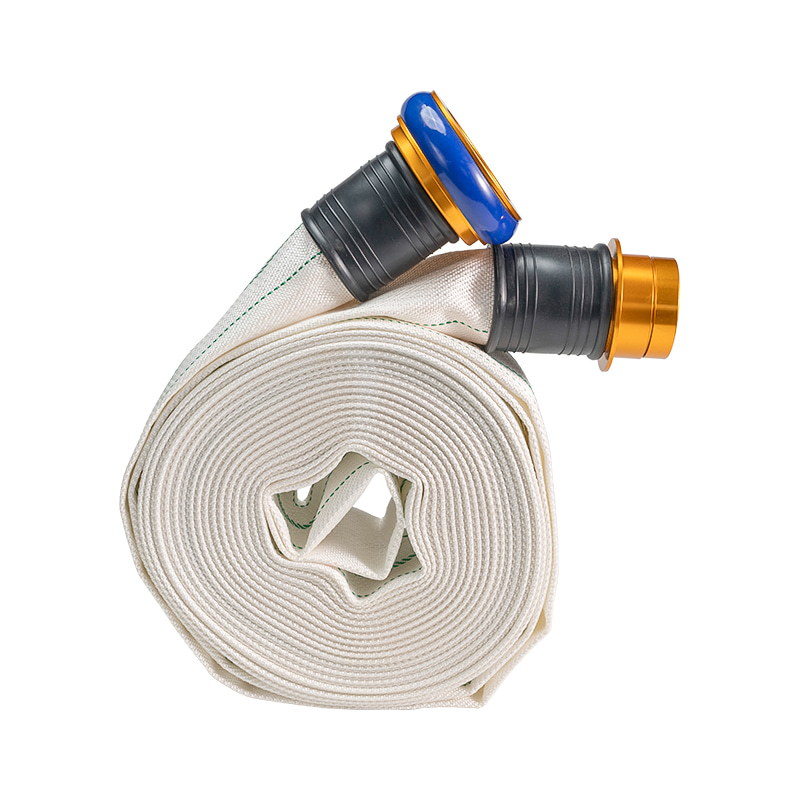
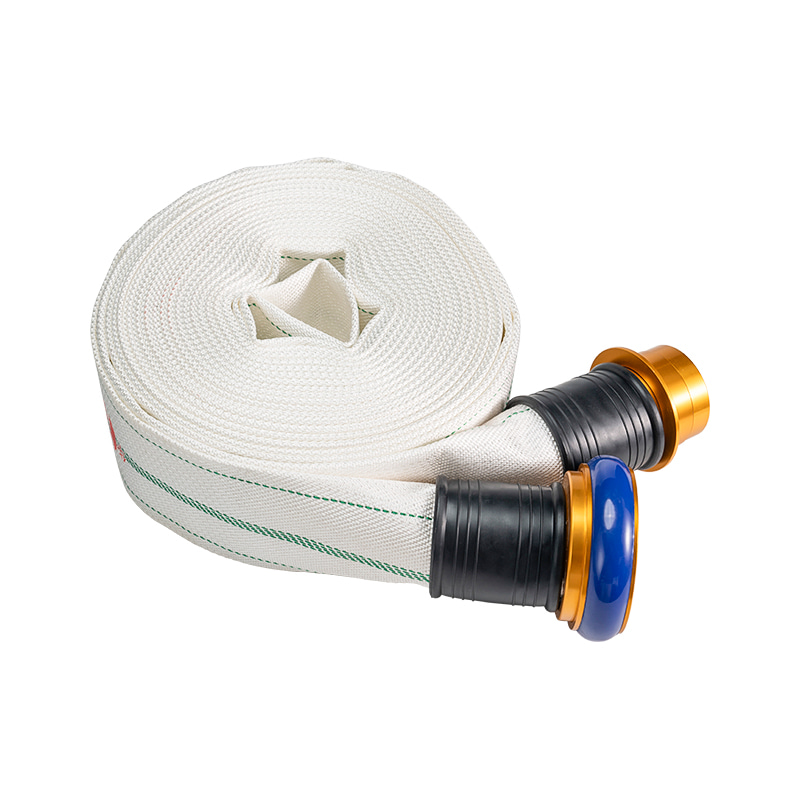
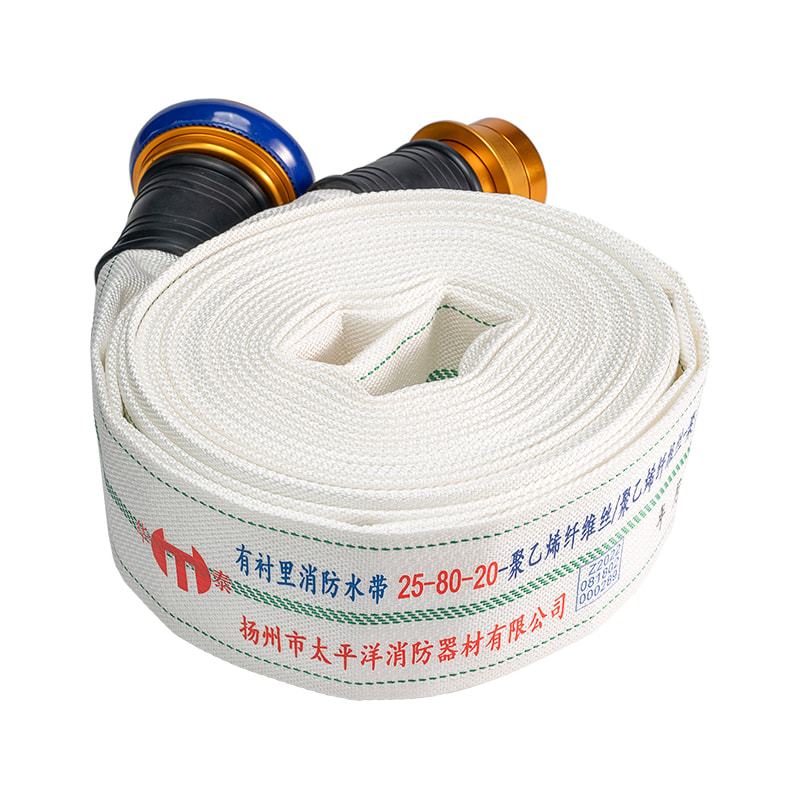
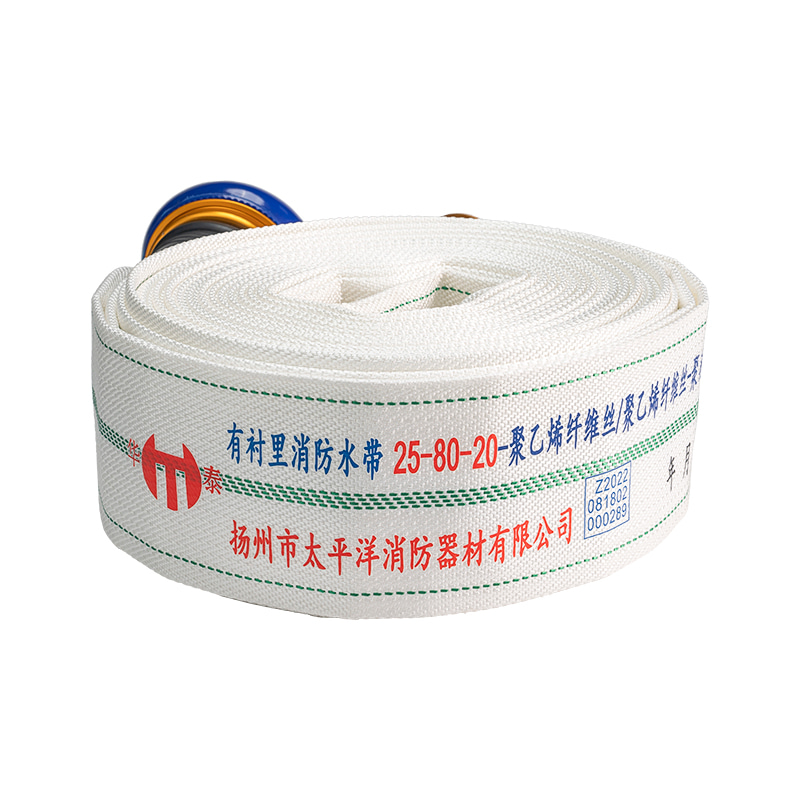
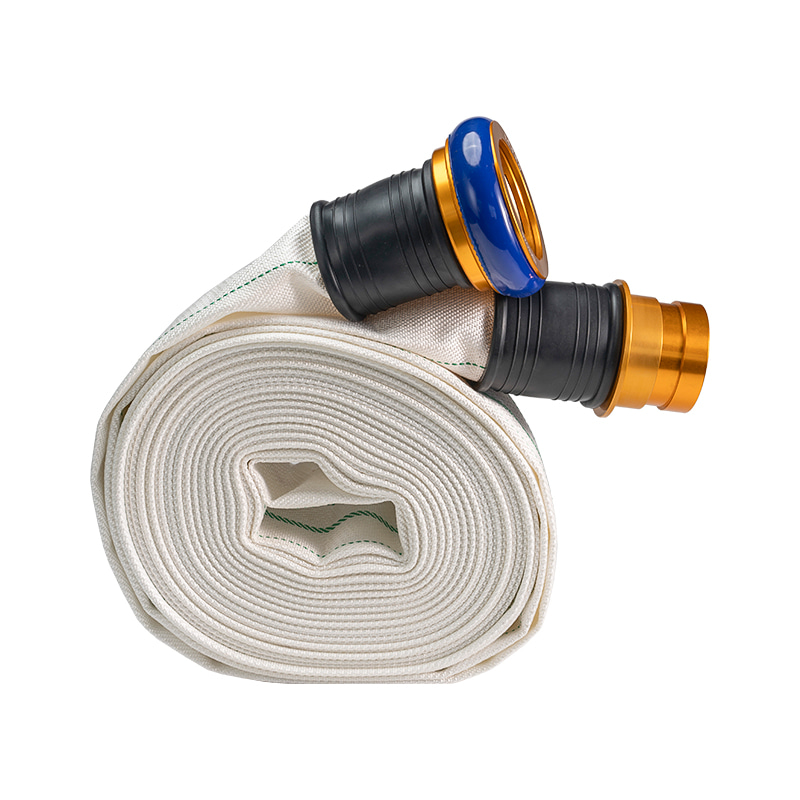
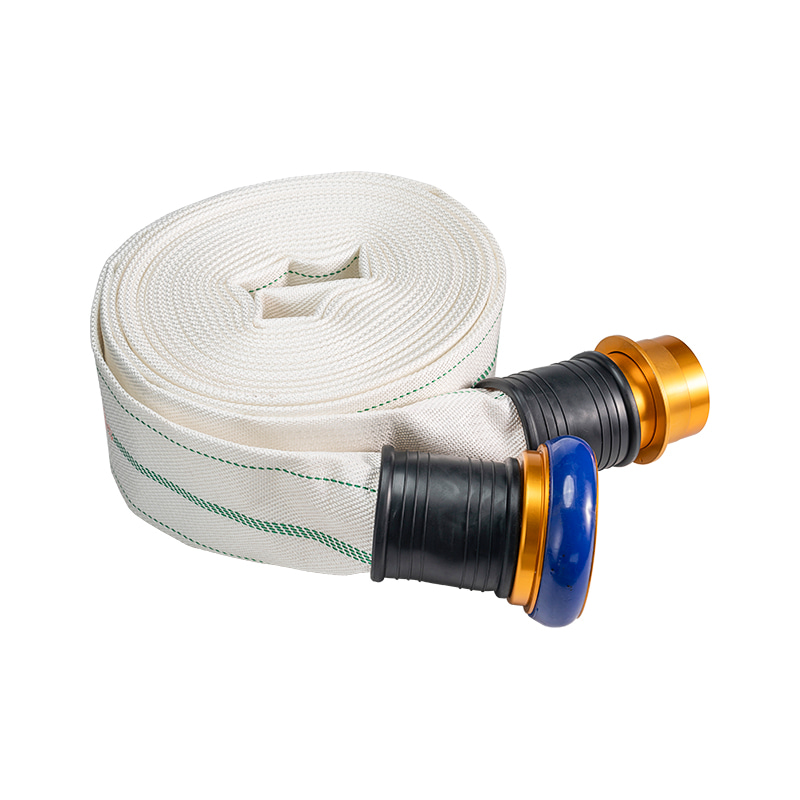
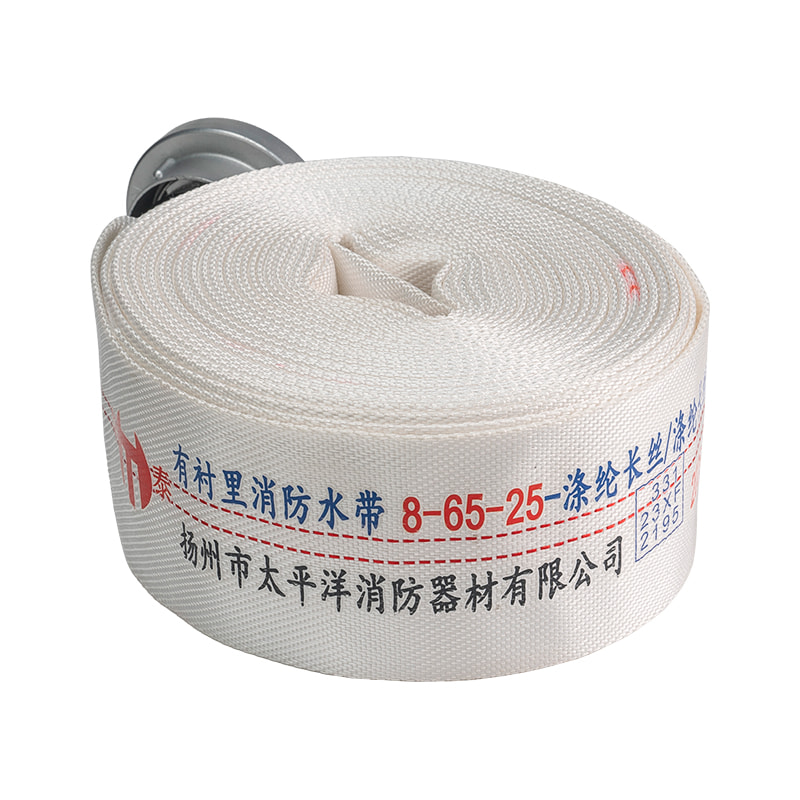
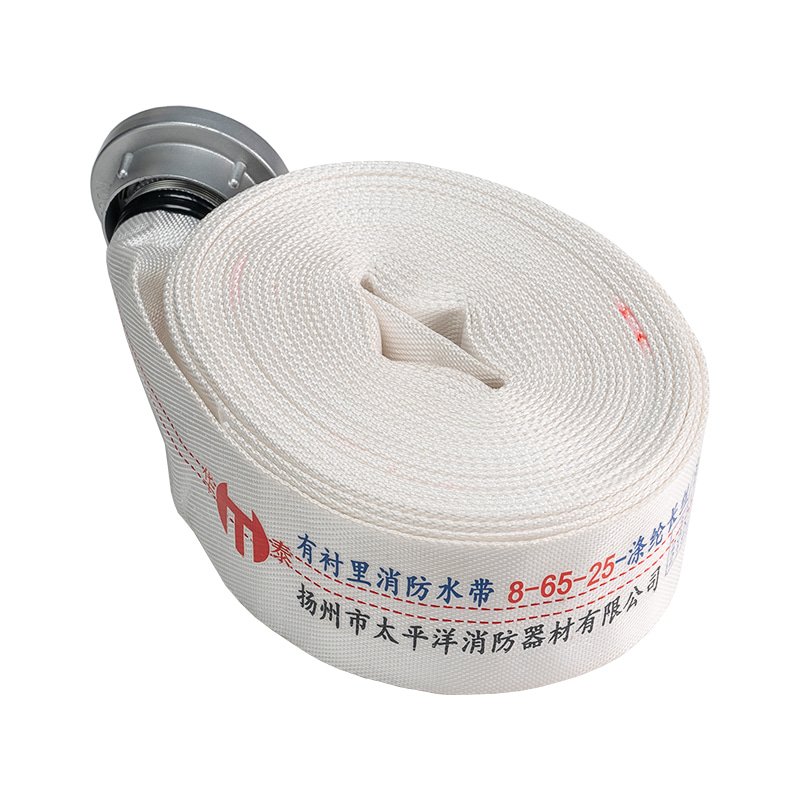
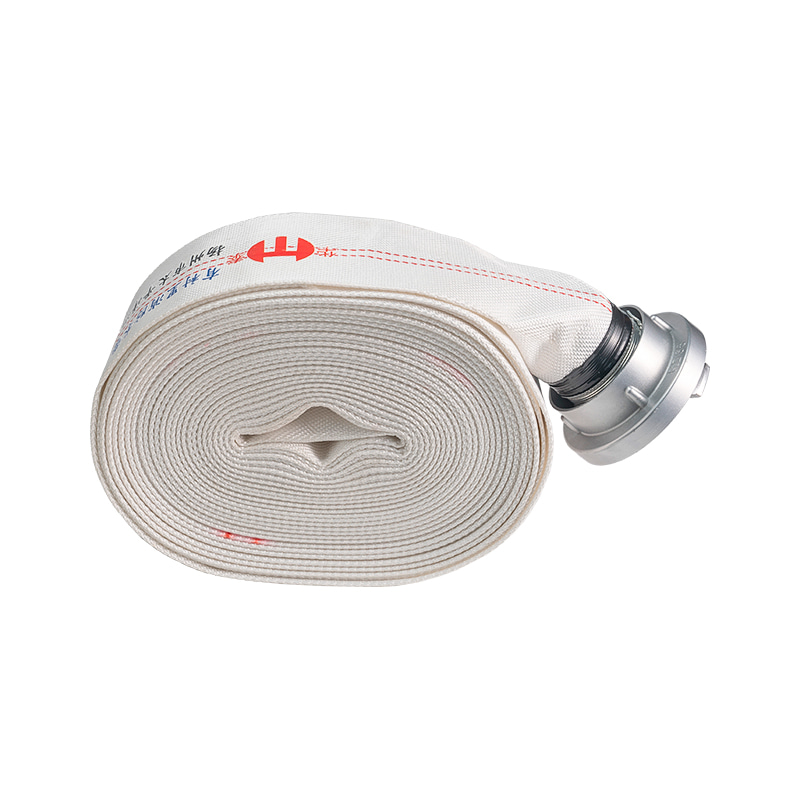
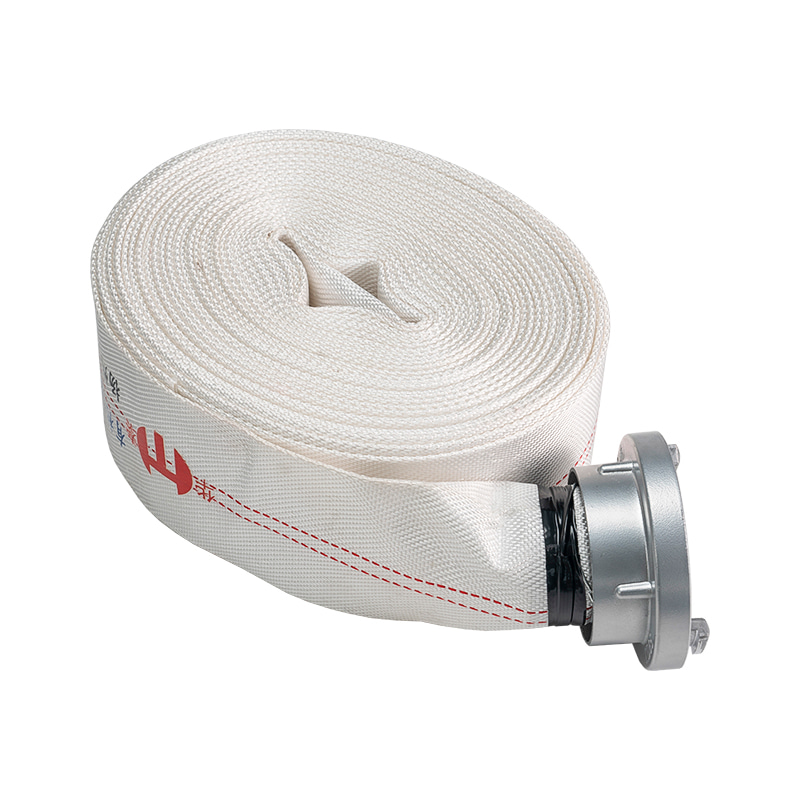
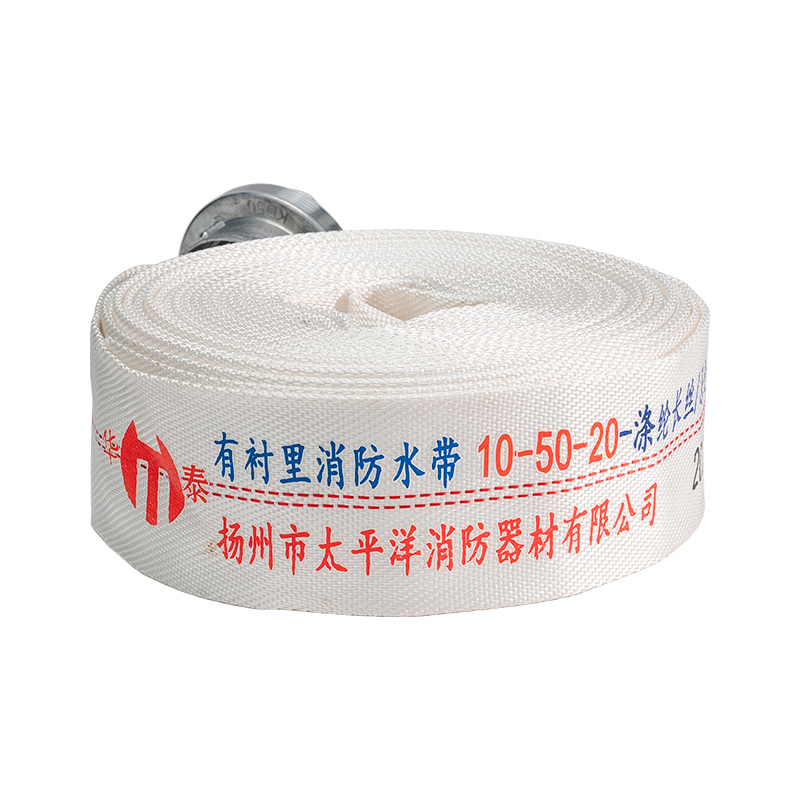
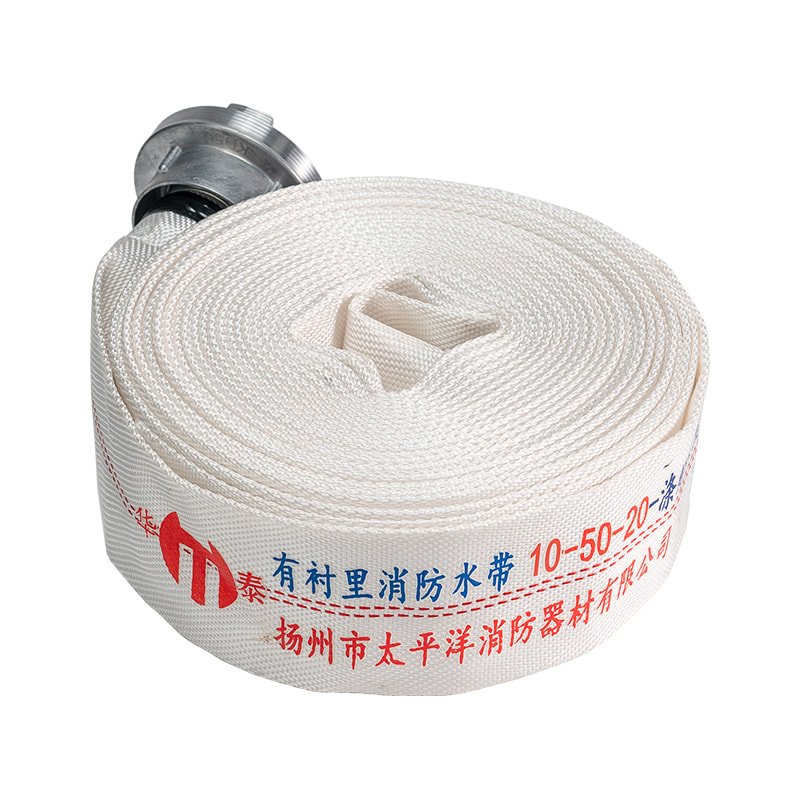
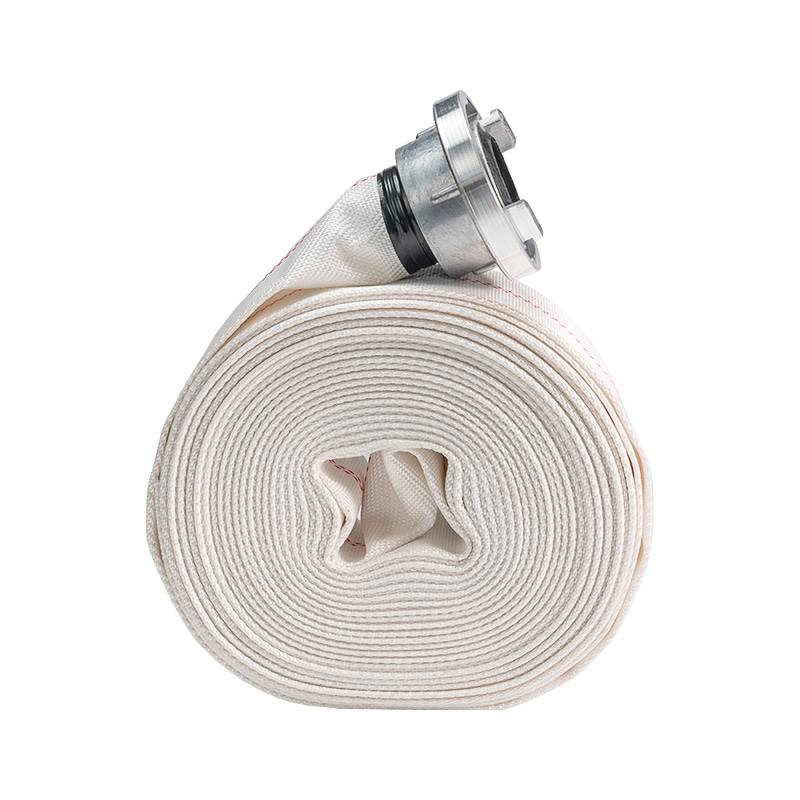
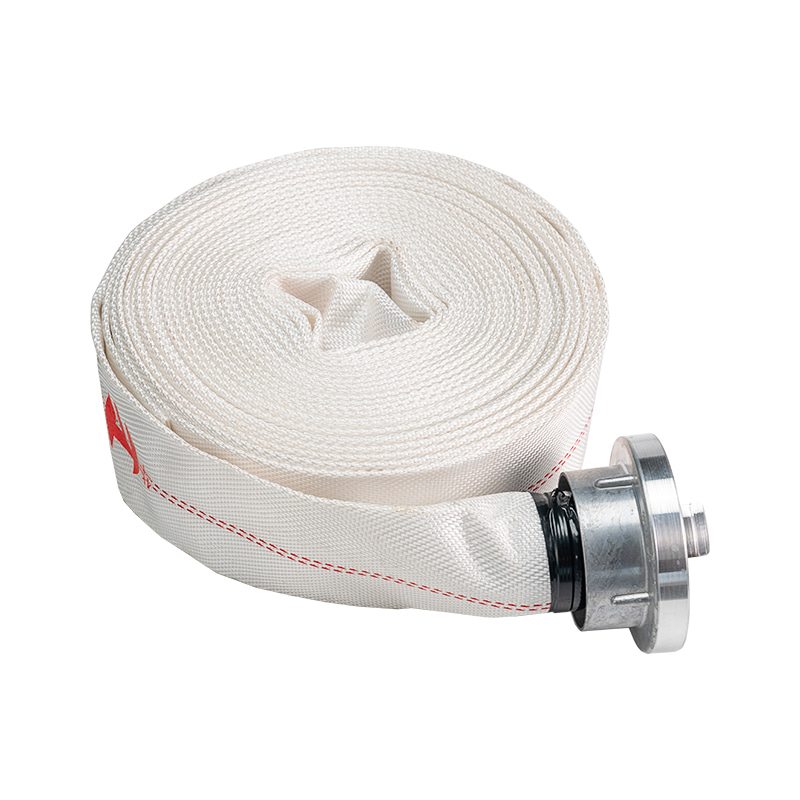
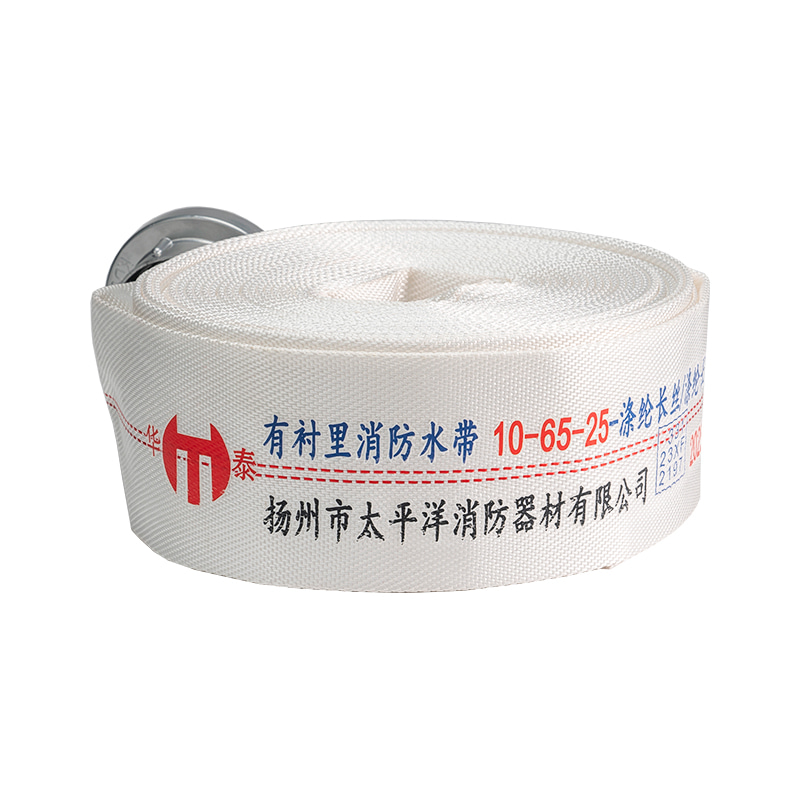
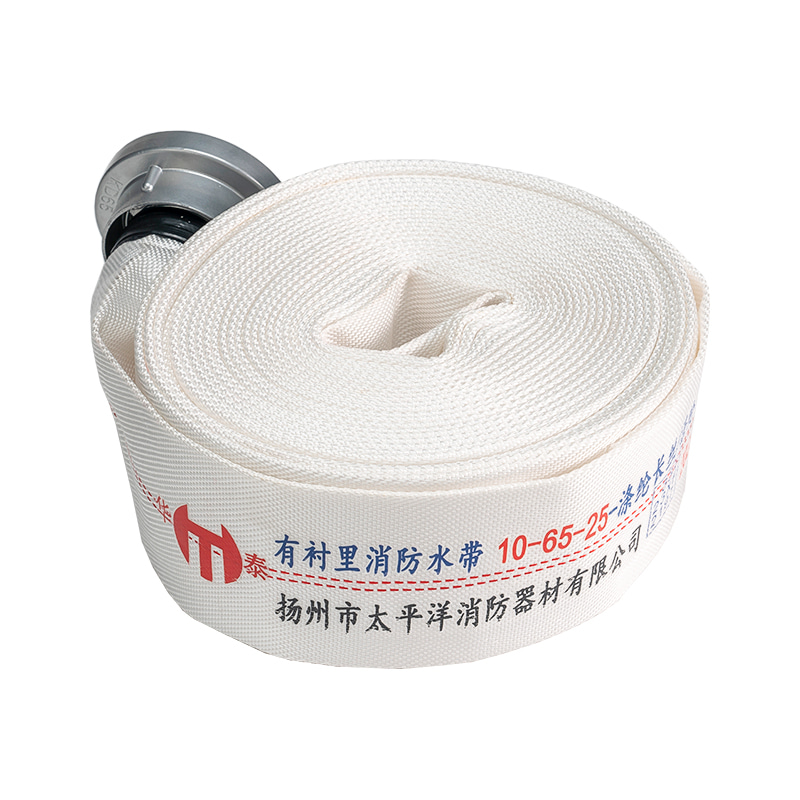
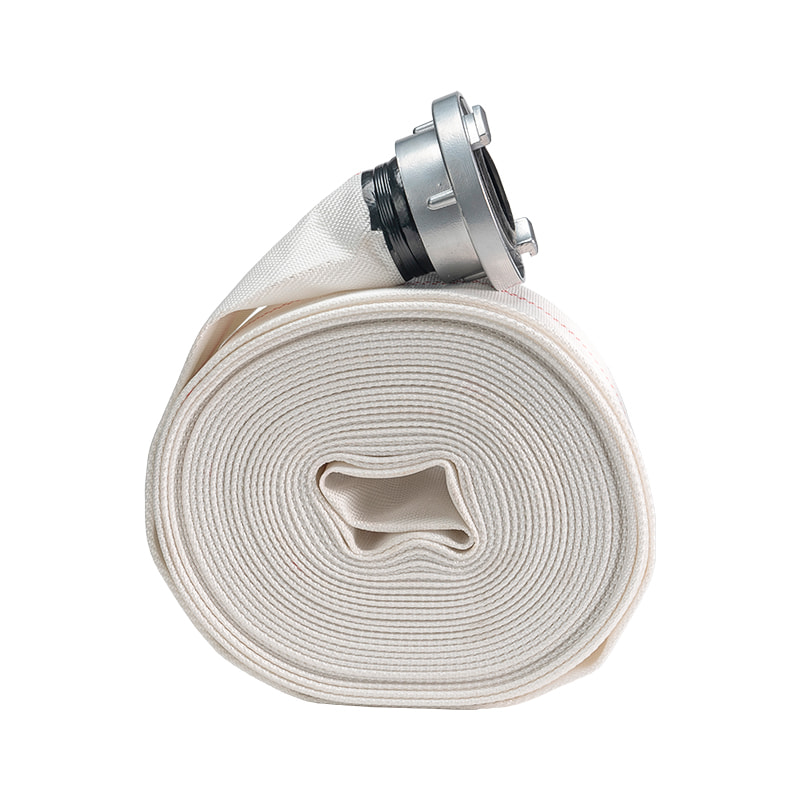
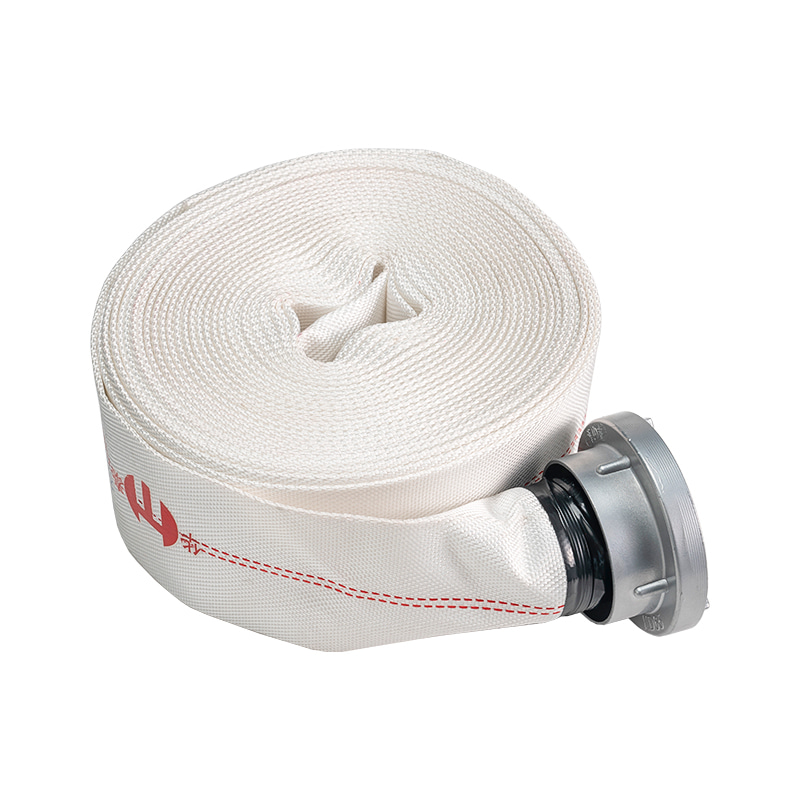
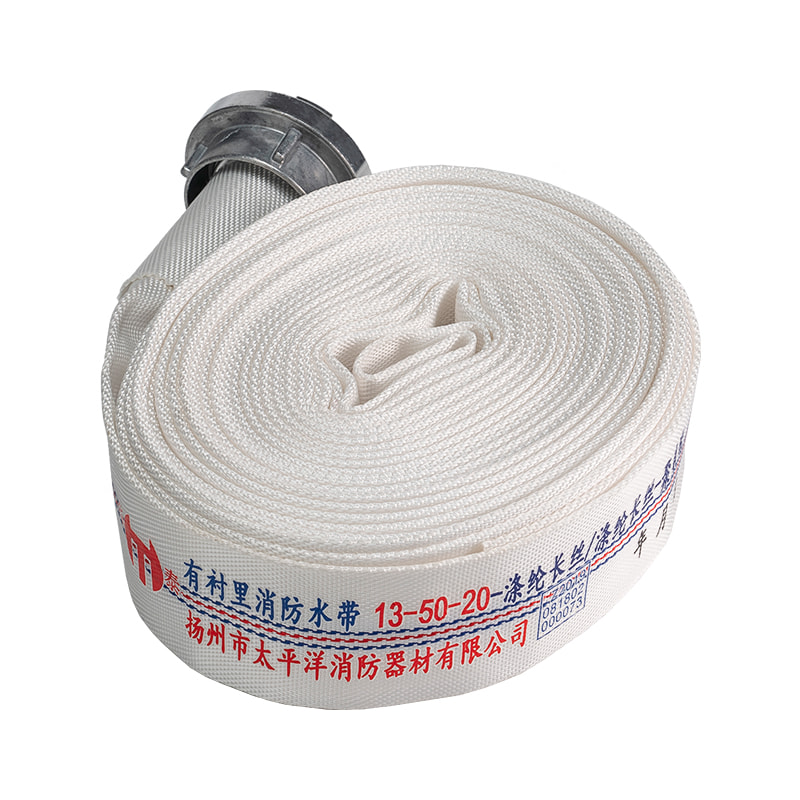
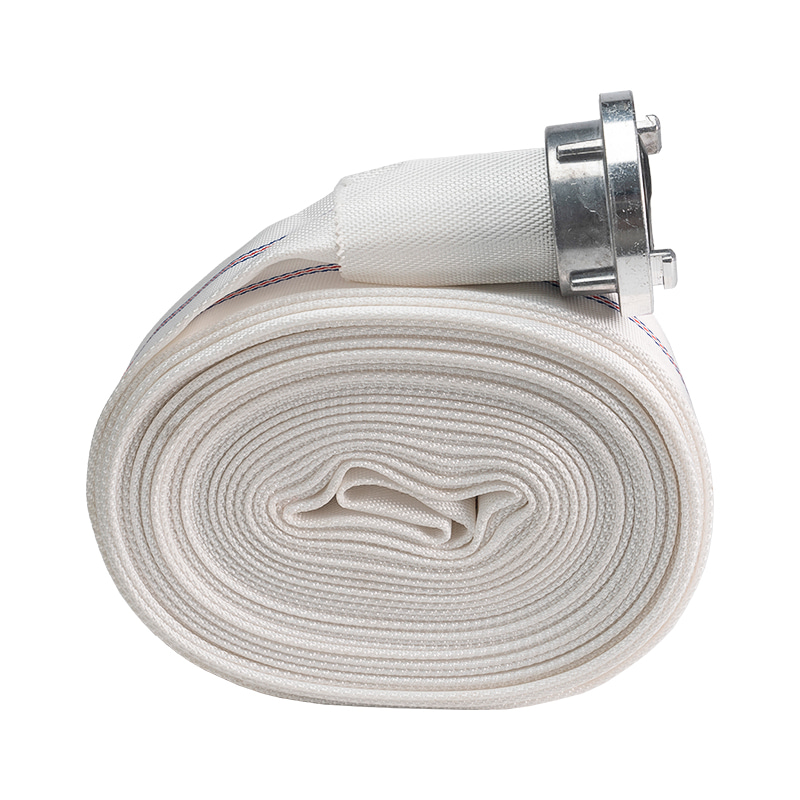
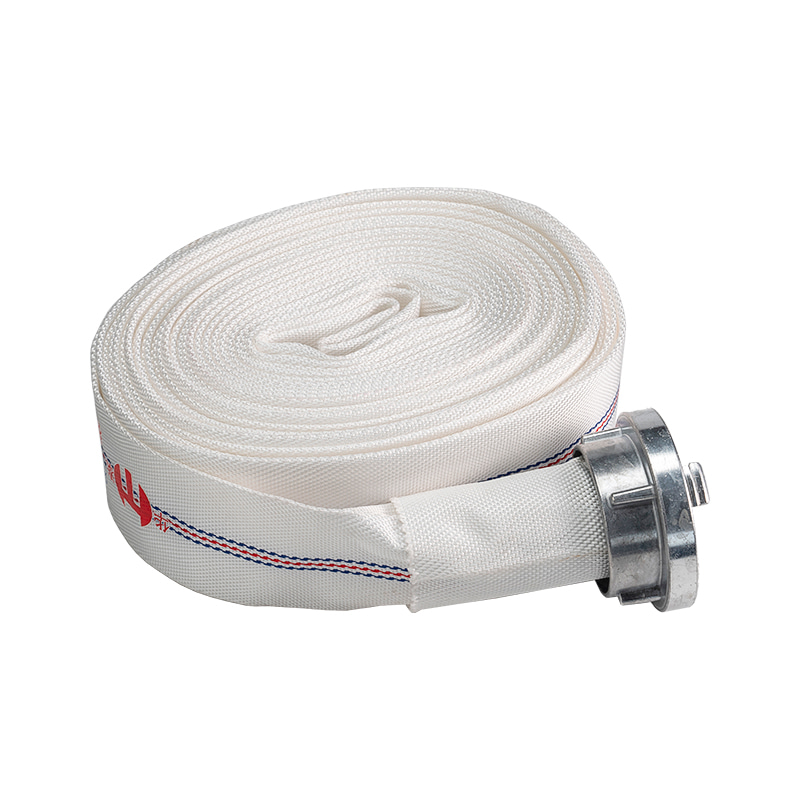
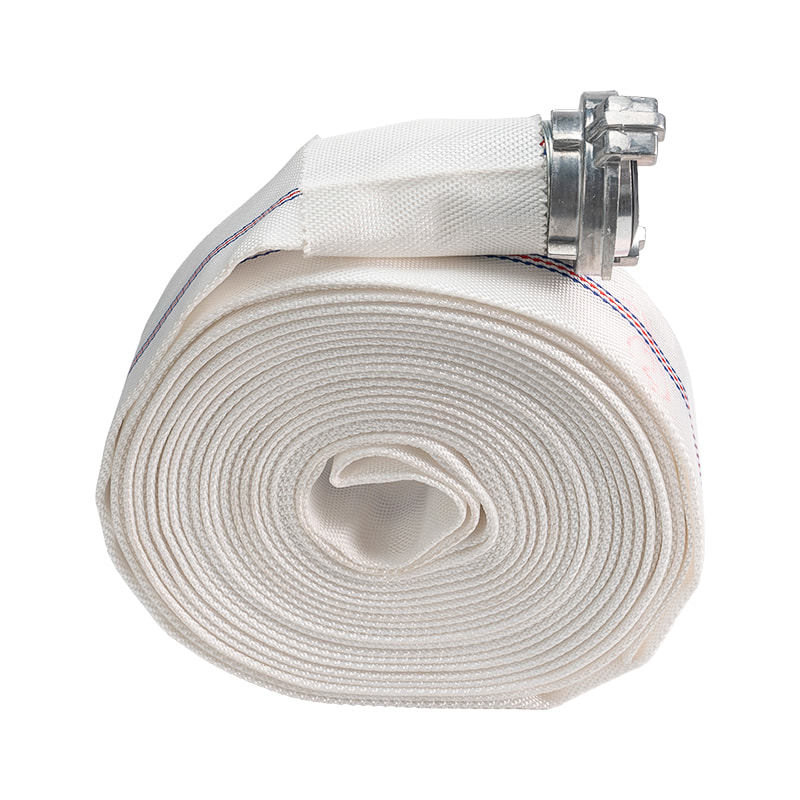
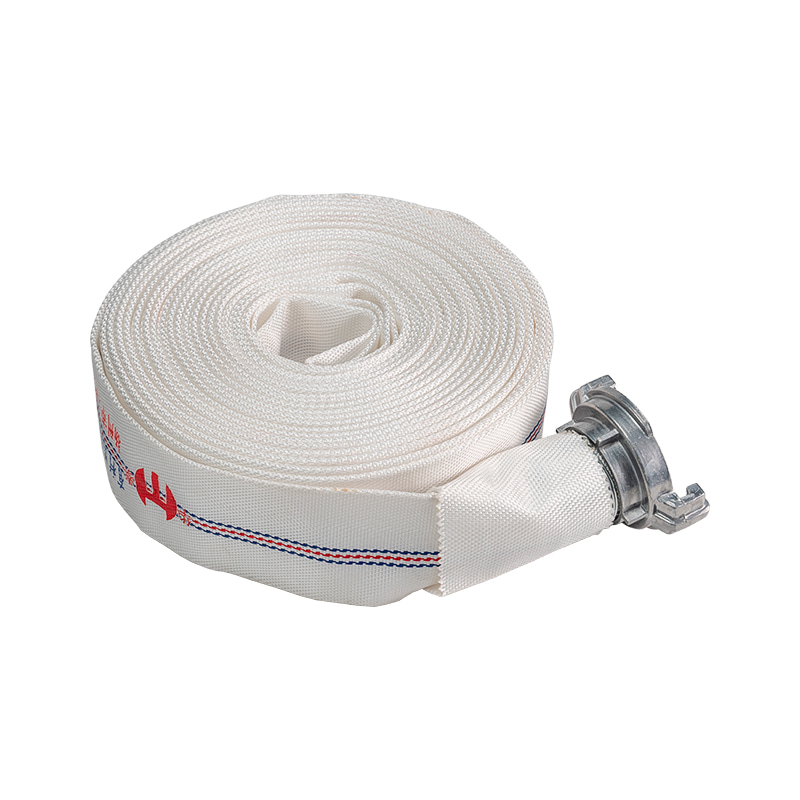
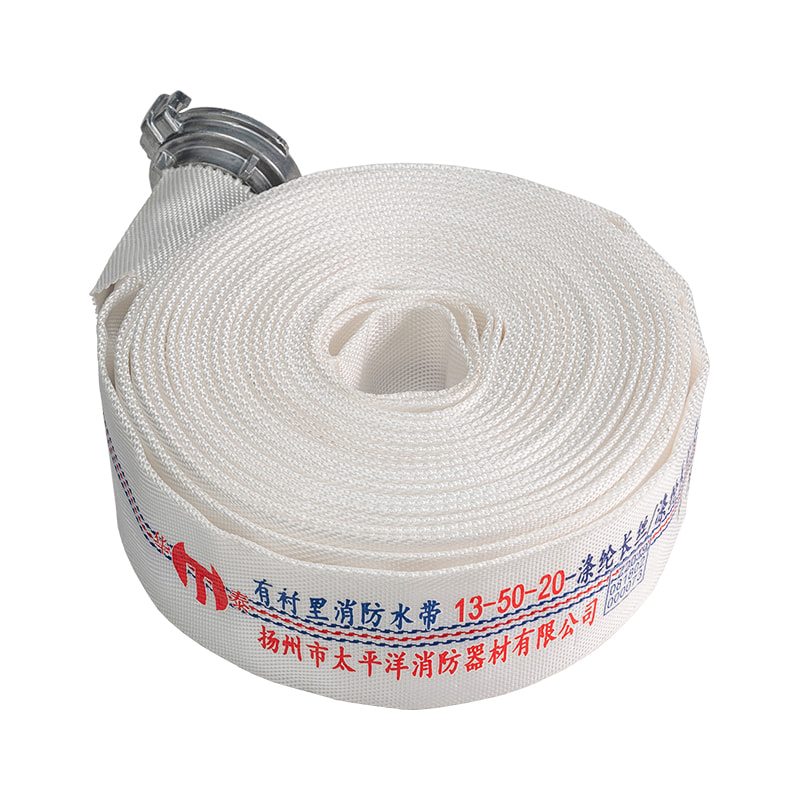
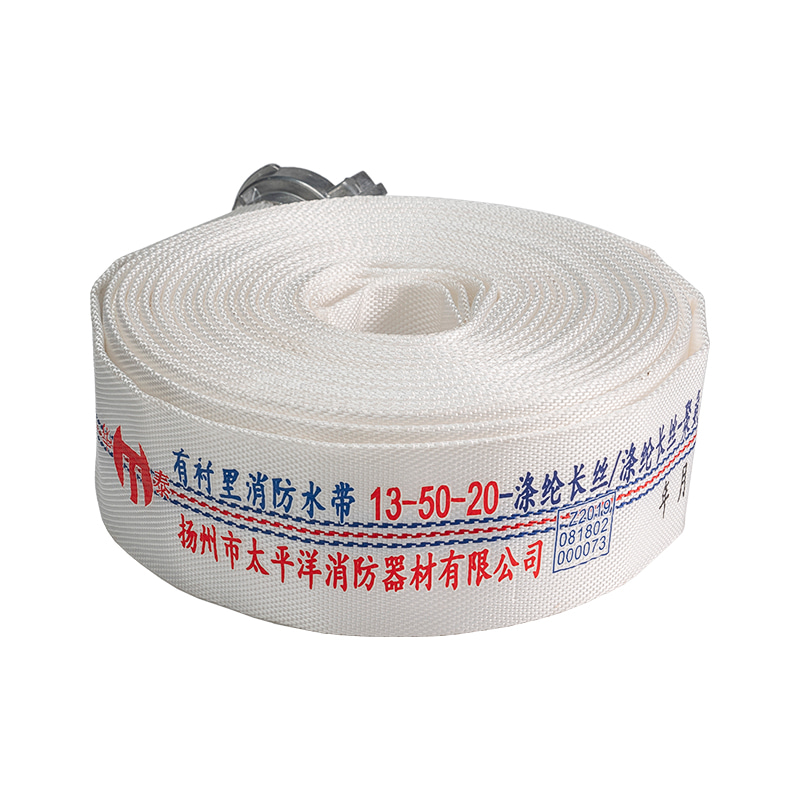
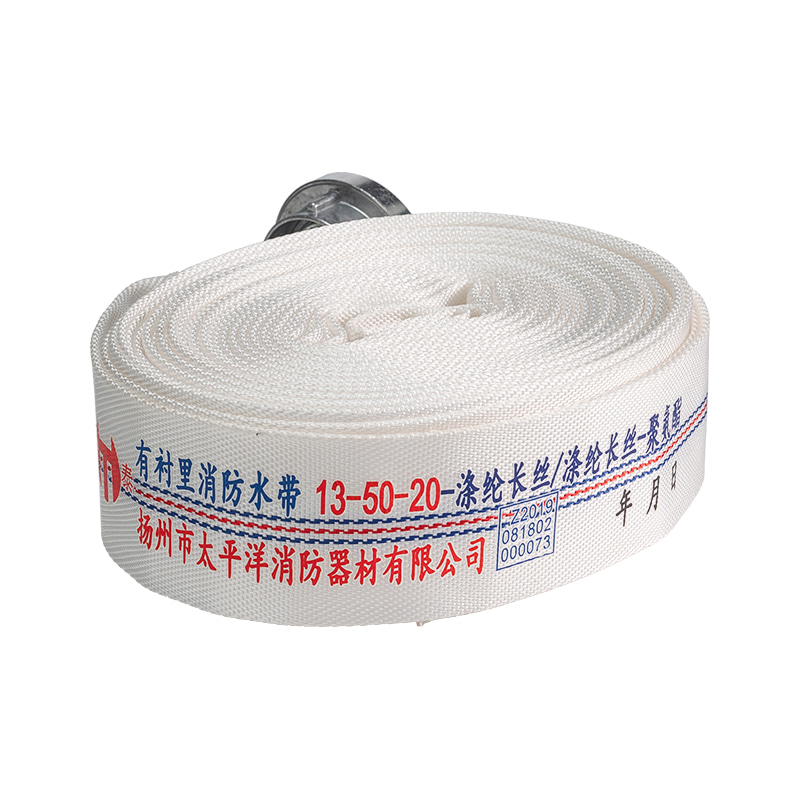
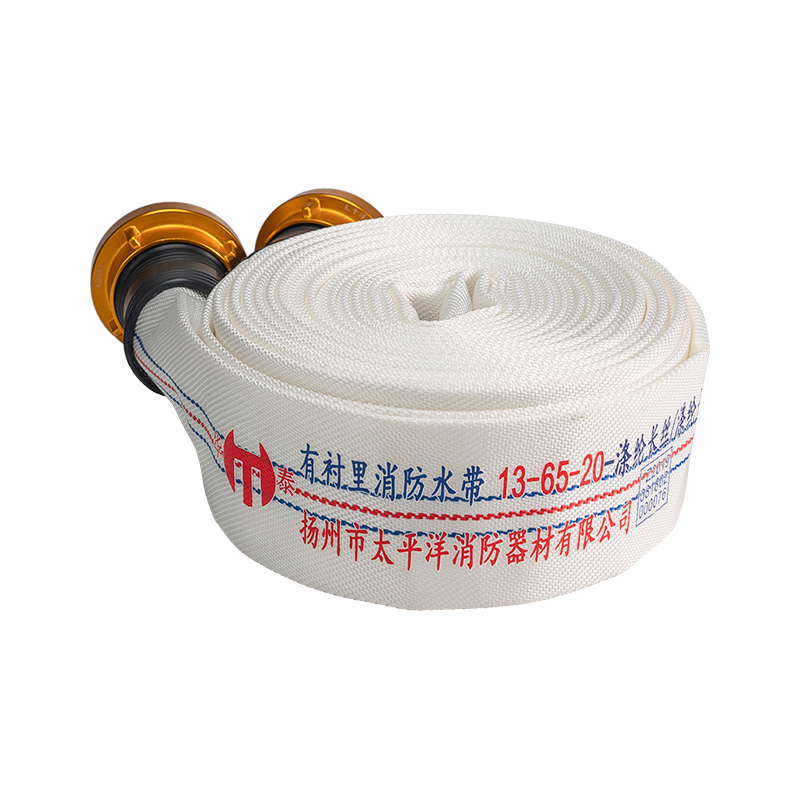
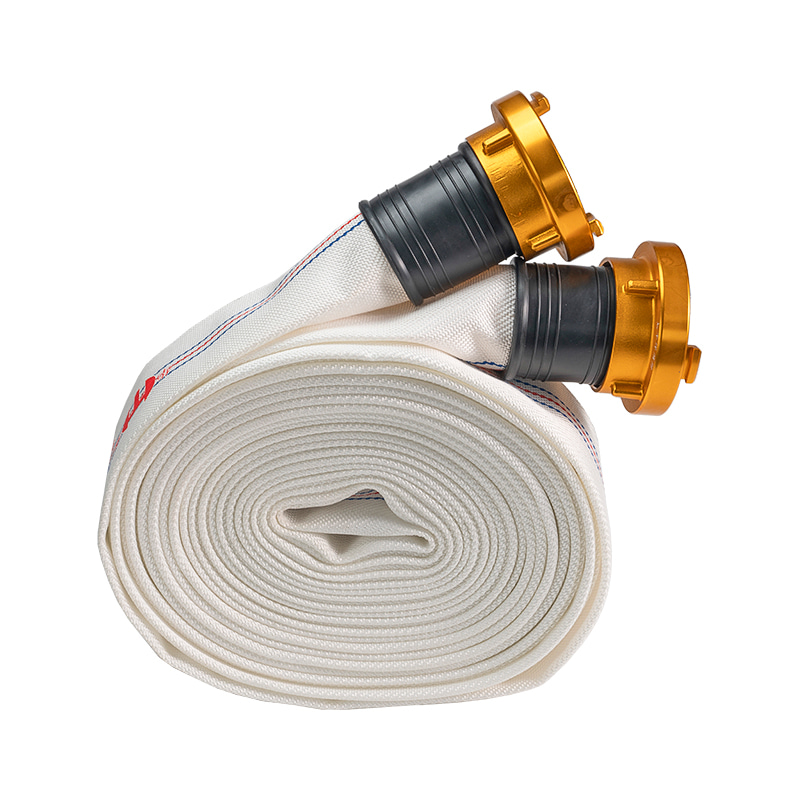
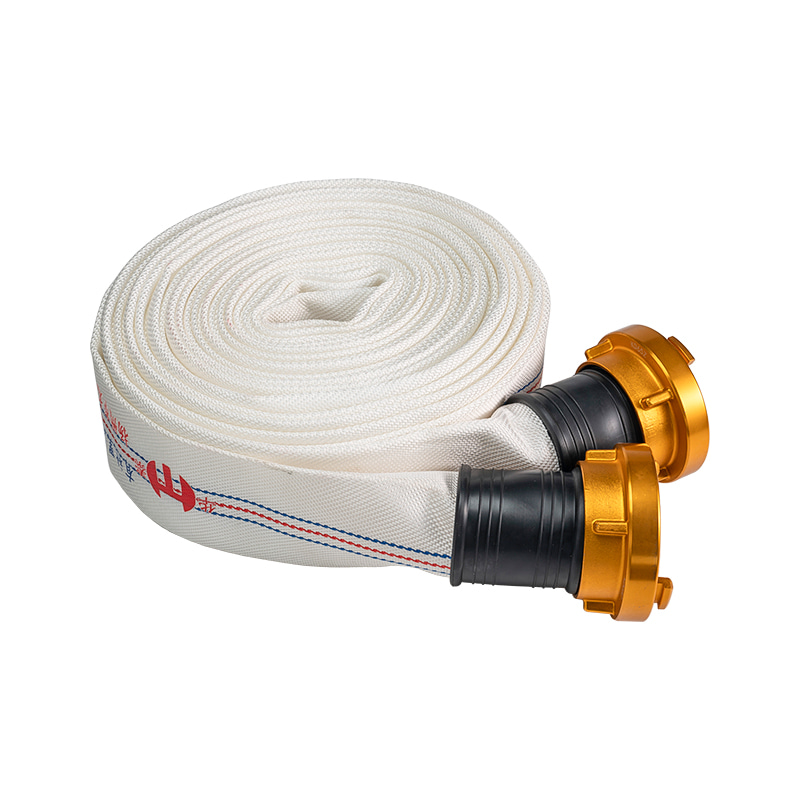
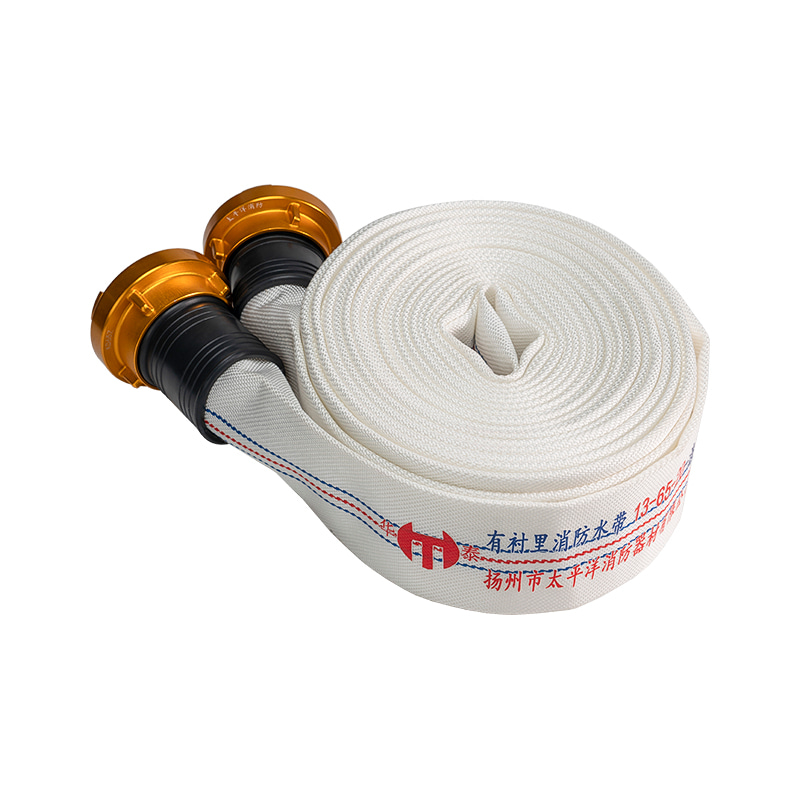
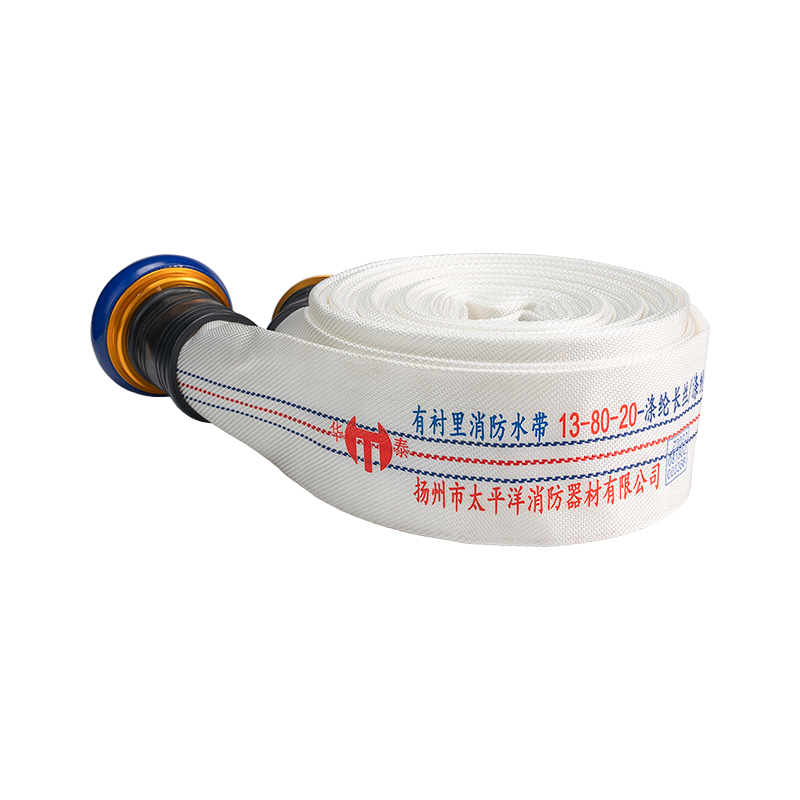
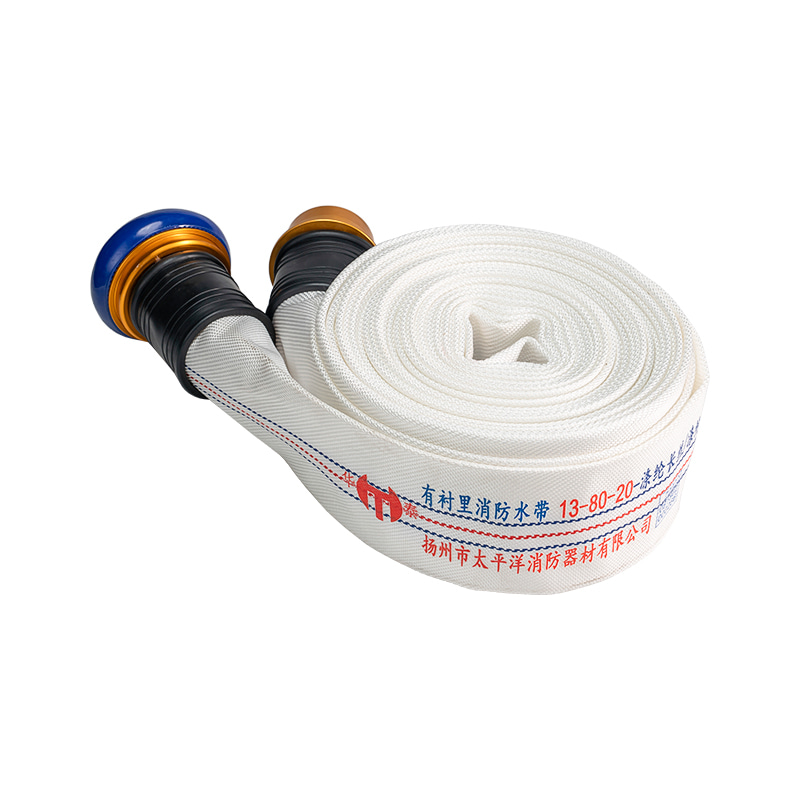
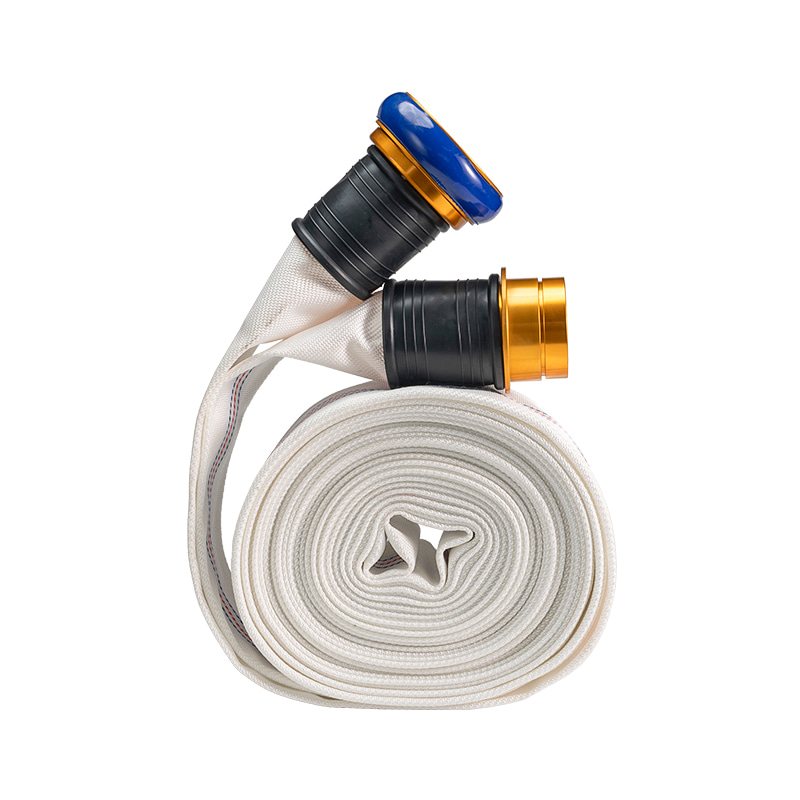
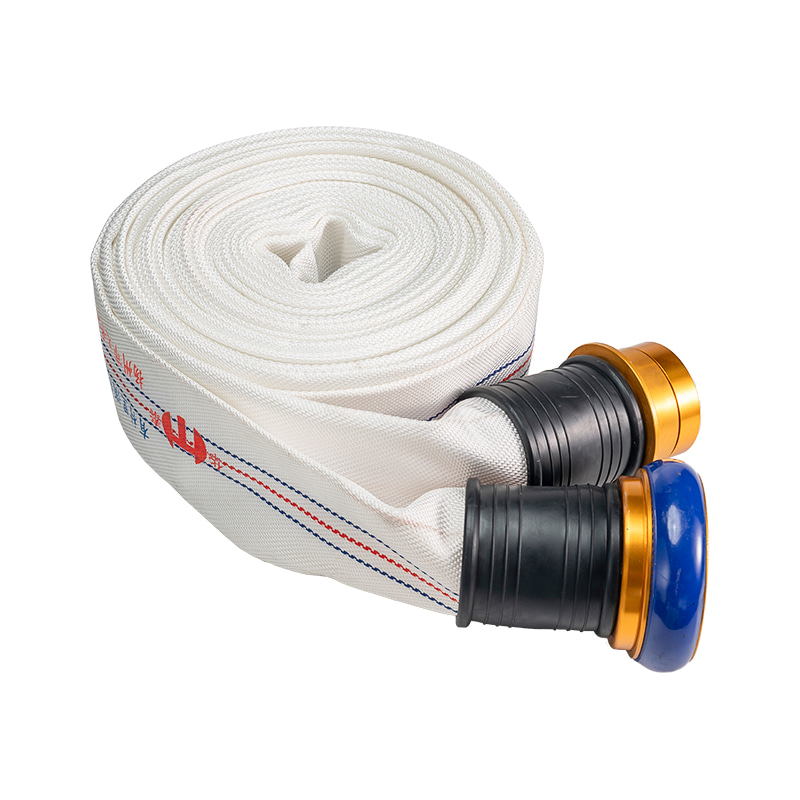
Taizhou Pacific Fire Equipment Co., Ltd. has manufactured fire hose and fire-fighting equipment since 1980, producing under the Pacific and Huatai brands from an 8,000 m² plant in Taizhou City, Jiangsu Province. Our double-sided adhesive fire hose is one of four hose families we build, alongside water curtain, luminous and coloured construction, and it covers 26 catalogued models across 8, 10, 13, 16, 20 and 25 pressure types with nominal bores from 25 mm to 100 mm. As a Double-Sided Adhesive Fire Hose manufacturer, we cut, couple, test and pack the hose in the same facility, so a project order arrives as a finished assembly rather than loose jacket length.
The family suits building standpipe systems, indoor hydrant and reel installations, industrial plants, warehouses, docks and marine applications, and it is also used for agricultural water transfer where a light, abrasion-tolerant hose is needed. Colours, cut lengths and end fittings are built to the project schedule rather than held to a fixed catalogue list.
Bonded Jacket Construction and Material Choice
In this hose the coating is bonded to both faces of the woven jacket rather than applied to the bore alone. The jacket is braided from synthetic filament in plain or twill weave, and the lining and cover are formed from rubber, rubber-plastic or polyurethane, with polyurethane used for the 13 type and above. Bonding both faces limits layer separation under repeated pressurisation and gives a smooth bore with a low-friction cover.
- Bonded bore and cover on a single braided jacket
- Rubber, rubber-plastic or polyurethane coating, polyurethane from 13 type upward
- High pressure, acid, alkali and elevated-temperature resistance
- Smooth, low-resistance bore for pressure retention
- Light, soft and easy to deploy and repack after use
- Super-light builds available for long manual runs
Our Adhesive Hose Range: Pressure Types, Bores and Lengths
Working pressure, nominal bore and finished length define a hose model, and the same three numbers are the basis of our cutting and testing records. The core types we produce in this family are set out below.
| Type |
Nominal inner diameter (mm) |
Working pressure (MPa) |
Burst pressure (MPa) |
Standard lengths (m) |
| 8 |
25 / 40 / 50 / 65 / 80 |
0.8 |
2.4 |
20 / 25 / 30 |
| 10 |
40 / 50 / 65 / 80 |
1.0 |
3.0 |
20 / 25 / 30 |
| 13 |
50 / 65 / 80 / 100 |
1.3 |
3.9 |
20 / 25 / 30 |
| 16 |
65 / 80 |
1.6 |
4.8 |
20 / 25 / 30 |
Model codes read left to right as pressure type, bore and length: 13-65-20 is a 1.3 MPa hose, 65 mm bore, 20 m long. The same convention runs across the range, and models currently built include 13-50-20, 13-65-20, 13-80-20, 13-100-20, 16-65-20, 16-80-20, 20-40-20, 20-65-20, 20-80-20, 25-65-20 and 25-80-20, with super-light 20-65-20 and 20-80-20 versions where handling weight is the deciding factor.
Where Each Build Fits on Site
- Building standpipe and hydrant cabinets: 8, 10 and 13 types in 50–65 mm bore for indoor cabinet and riser duty.
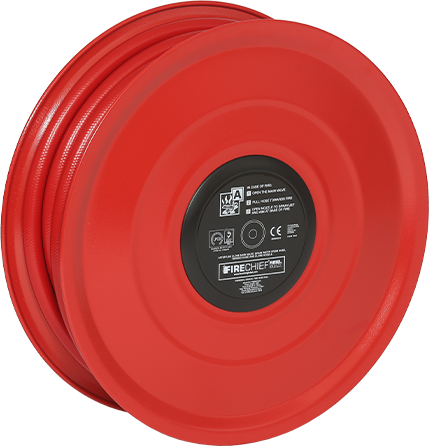
- Hose reel systems: lightweight 19 mm hose matched to our reels where a single operator must deploy quickly.
- Industrial plants and warehouses: 13 and 16 types where pressure demand and abrasion are higher.
- Docks, stations, ships and terminals: larger bores with fixed couplings for salt-air and heavy handling environments.
- Agriculture and general water transfer: 8 and 10 types in long runs, including water curtain patterns and the broader fire hose range.
- Visibility-critical locations: high-density coloured fire hose in red, green, orange or purple for coded routing.
Configuration Options We Build To
| Option |
What we supply |
| Length |
20 m, 25 m and 30 m as standard; other cut lengths to the project schedule |
| Colour |
Red, green, orange, purple and other jacket colours to order |
| End fittings |
Coupling, pipe-thread, internal-thread and external-thread fire couplings, plus reducing interfaces, in 25–150 mm nominal diameters at 1.6 MPa nominal pressure for water, foam and mixtures |
| Assembly |
Hose tied and coupled to the fire interface in our plant, shipped ready to install |
| Reel compatibility |
Matched with our hose reels, including JPS 0.8-19 reels using 19 mm bore hose |
| Marking |
Jacket printing and identification marking set to the customer's wording |
Quality Control and Acceptance Testing
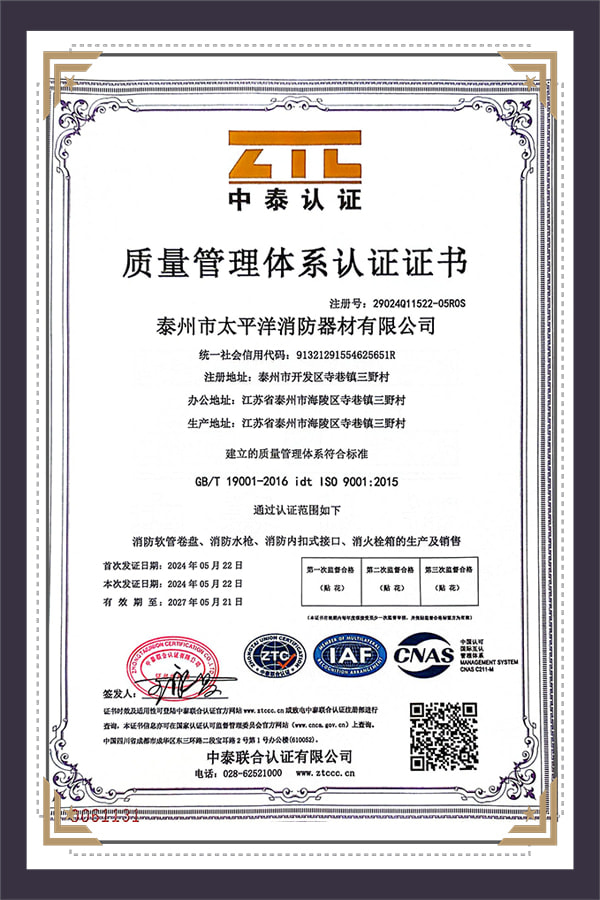
Inspection is carried out after each production process, and finished hose is inspected 100% against the agreed specification and the applicable standard. Our own laboratory and testing equipment support the release of each batch, with dimensional, pressure and assembly checks recorded so that a delivery can be traced back to its production run.
- Hydrostatic proof test at the declared working pressure for the model ordered
- Burst verification against the 1:3 working-to-burst ratio of the series
- Bore, wall thickness and cut-length measurement
- Coating and bond inspection for separation or surface defects
- Coupling pull and fit check on assembled lengths
- Batch records issued with the shipping documents
Information We Use to Configure Your Solution
| Project input |
What it determines |
| Working pressure and flow requirement |
Pressure type, jacket construction and coating material |
| Nominal bore and run length |
Model code, cut length and pressure loss over the run |
| Hydrant, valve or reel interface |
Coupling type, thread form and assembly method |
| Operating environment |
Abrasion tolerance, chemical exposure and colour selection |
| Quantity per size and delivery schedule |
Cutting plan, packing and container loading |
| Marking, packing and destination |
Jacket printing, carton or pallet packing and shipping mode |
Delivery, Documentation and Serviceability
Orders ship by sea as standard, with air freight used when a site programme is tight, and our main export destinations are Africa and Pakistan. Inquiries received on working days are answered within 12 hours. Deliveries are accompanied by the packing list, batch inspection records and model data so the receiving team can match hose to cabinet, riser or reel before installation.
Double-sided adhesive hose is drained, dried and repacked flat after use, and stored away from direct sunlight and oils. Jacket abrasion, coupling thread condition and the bond line are the three points we advise checking at each inspection interval. Replacement couplings, gaskets and washers can be supplied with repeat hose orders so a site keeps matching spares.
Frequently Asked Questions
What makes a hose double-sided adhesive rather than simply lined?
The coating is bonded to both the inner and outer faces of the braided jacket, not only to the bore. That two-sided bond holds the layer in place through repeated pressurisation and repacking, and it also gives the cover a smooth, low-friction surface that resists abrasion on concrete and metal edges.
Which models and pressure types do you manufacture in this family?
We produce 8, 10, 13, 16, 20 and 25 pressure types with nominal bores from 25 mm to 100 mm, in 20 m, 25 m and 30 m standard lengths. Common builds include 13-50-20, 13-65-20, 13-80-20, 16-65-20, 16-80-20, 20-65-20, 20-80-20, 25-65-20 and 25-80-20, together with super-light versions for long manual runs.
Can the hose be supplied with couplings already fitted?
Yes. We tie the hose to the fire interface in our plant and supply assembled lengths ready for installation. Coupling, pipe-thread, internal-thread and external-thread types, and reducing interfaces, are available in 25–150 mm nominal diameters at 1.6 MPa nominal pressure for water, foam and foam mixtures.
Are custom lengths, colours and jacket markings available?
Length, colour and marking are built to order. Jackets can be produced in red, green, orange, purple and other shades, and we develop and produce against customer drawings or samples where a project needs a non-standard colour code or identification print.
How is quality verified before dispatch?
Each production process is inspected as it completes, and finished hose is inspected 100% against the agreed specification and the applicable standard. Testing covers proof pressure, burst verification, bore and length measurement, coating bond condition and coupling fit, with batch records issued alongside the packing list.
How should the hose be stored and maintained between inspections?
Drain, dry and repack the hose flat after use, and keep it out of direct sunlight and away from oils and solvents. At each inspection interval check jacket abrasion, coupling thread condition and the bond line; replacement couplings, gaskets and washers can be ordered with repeat hose deliveries.

 English
  中文简体
中文简体  русский
  عربى
عربى